Title here
Summary here


Side-by-side comparison of available Zynq-7000 development boards by features and price
March 4, 20148 minutes
If you’re interested in testing out the Zynq-7000 SoC from Xilinx there are now quite a few options available, so it comes down to a question of features vs price. Below I’ve listed the most important features of the available boards side-by-side to help you make the right decision for yourself or your company. I’ll also go into what I think of each board before we look at the boards in terms of their popularity.
The following are what I would consider the low-end boards for those looking at getting their hands on a Zynq with minimal investment. These are perfect for hobbyists, but can also be great for companies interested in integrating the smaller model Zynq into their products.
| ZYBO | MicroZed | ZedBoard |
|---|---|---|
| Entry level | Low-cost | Versatile |
| $189 | $199 | $395 |
| ZC7Z010-1CLG400C | +XC7Z010-1CLG400C | XC7Z020-CLG484-1 |
| 512MB x32 DDR3 | 1 GB of DDR3 SDRAM | 512 MB DDR3 |
| 128Mb QSPI Flash | 128 Mb of QSPI Flash | 256 Mb Quad-SPI Flash |
| MicroSD slot | 4GB Micro SD card | 4 GB SD card |
| No FMC LPC | No FMC LPC (see note 1) | FMC LPC |
| No FMC HPC | No FMC HPC (see note 1) | No FMC HPC |
| Pmod connectors x 6 | 2x6 Pmod exposes 8 PS MIO 2 connectors x 50 User I/Os | Five 2x6 Pmod headers exposing 32 PL I/O and 8 PS MIO |
| 1G/100M/10Mbit Ethernet | 10/100/1000 Ethernet | 10/100/1000 Ethernet |
| OTG USB 2.0 PHY | USB 2.0 fixed as host | USB OTG |
| USB UART | USB-UART | USB UART |
| No PCIe | No PCIe | No PCIe |
| Dual-role HDMI 720P | No video | HDMI 1080P + VGA |
| Headphone out, mic & line | No audio | Headphone & Mic in |
| No analog | XADC thru expansion cons | XADC header |
Note 1: The MicroZed offers three prototype carriers - FMC, I/O and breakout
These are what I consider to be the high-end Zynq boards for those with extra budget who need the extra features or those who want to test the Zynq at maximum capacity. You’ll notice that I included the ZedBoard in both lists, that’s because I consider it to be versatile enough to compete with the high-end boards, yet low enough in price to compete with the low-end boards.
| ZedBoard | ZC702 | ZC706 | Zynq MMP | Zynq Mini-ITX |
|---|---|---|---|---|
| Versatile | Powerful | No limits | Powerful SoM | Zynq Motherboard |
| $395 | $895 | $2495 | $1295 | $1950 |
| XC7Z020-CLG484-1 | XC7Z020 CLG484 -1 | XC7Z045 FFG900 – 2 | XC7Z045-1FFG900 or XC7Z100-2FFG900 | XC7Z045/XC7Z100-2FFG900 |
| 512 MB DDR3 | DDR3 1GB | DDR3 1GB + DDR3 SODIM 1GB | DDR3 1GB | DDR3 1GB PS, DDR3 1GB PL |
| 256 Mb Quad-SPI Flash | 16MB Quad SPI Flash | 2X16MB Quad SPI Flash | 128 MB parallel Flash, 32MB Quad SPI Flash | 32MB QSPI Flash |
| 4 GB SD card | SD Card Slot | SD Card Slot | Micro SD Card Slot | MicroSD Card Slot |
| FMC LPC | FMC LPC x 2 | FMC LPC | No FMC LPC | No FMC LPC |
| No FMC HPC | No FMC HPC | FMC HPC | No FMC HPC | 1xFMC HPC |
| Five 2x6 Pmod headers exposing 32 PL I/O and 8 PS MIO | Dual & single Pmod | Dual & Single Pmod | No Pmods | No Pmods |
| 10/100/1000 Ethernet | Gigabit Ethernet | Gigabit Ethernet | 10/100/1000 Ethernet | 10/100/1000 Ethernet |
| USB OTG | USB OTG 1 (PS) | USB OTG 1 (PS) | USB 2.0 interface | USB 2.0 4-port HUB |
| USB UART | USB UART (PS) | USB UART (PS) | USB UART | USB UART |
| No PCIe | No PCIe | PCIe Gen2x4 | No PCIe | PCIe Gen2x4 Root complex |
| HDMI 1080P, VGA | HDMI Video OUT | HDMI IN & OUT | No video | HDMI |
| Headphone & Mic in | No audio | No audio | No audio | Audio codec |
| XADC header | XADC header | AMS interface | No analog | No analog |
| No GTX | No GTX | GTX | 8 GTX ports | SFP & SATA3 |
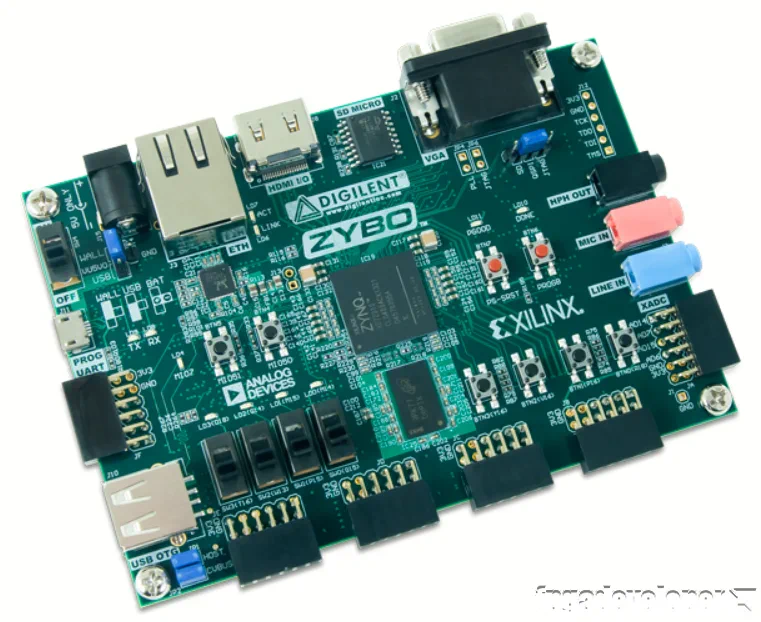
A good little entry level board with the smallest in the Zynq family.
Get the ZYBO if your application is video/audio and/or you want to take advantage of a few Digilent Pmod compatible devices.
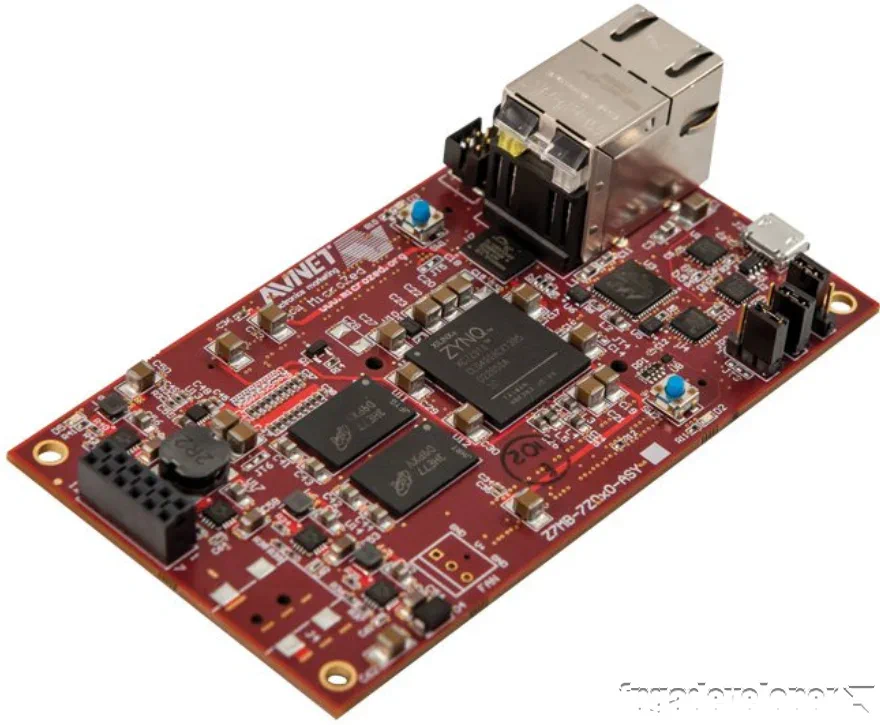
Best low-cost board. Can be purchased with an I/O carrier card to extend the I/O options.
The MicroZed, like the ZYBO, has a minimum of external hardware but the big I/O connectors make it adaptable to a huge number of applications. If the board gains popularity I can imagine that we’ll see more expansion boards for this come onto the market. I would have preferred to see the FMC connector used on this board, but apart from that I really like it and consider it the best low-cost board available. (Update: you can actually buy an FMC expansion carrier for the MicroZed).
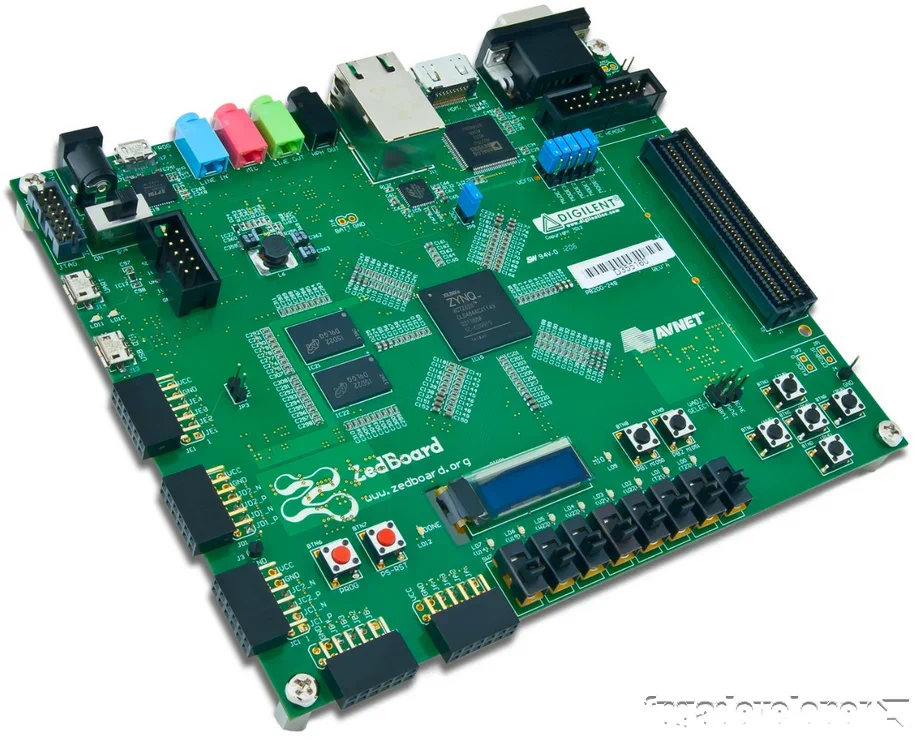
Best value board in my opinion, with most of the features of the more expensive boards, the ZedBoard should satisfy a lot of Zynq applications.
The ZedBoard sits in the middle of the range in terms of price but it has great connectivity options, well worth it in my opinion.
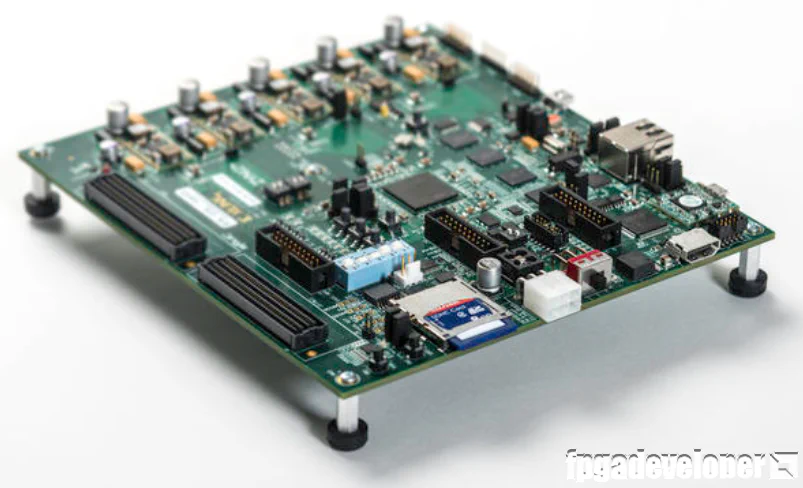
Powerful board, comparable to the ZedBoard but it has the advantage of an extra LPC FMC and the XADC header.
With respect to the ZedBoard, the ZC702 allows you to double your I/O options for twice the price, sounds fair enough.
For the high-end user who doesn’t want to be held back by a lack of resources.
The only board available with PCIe edge connector, so for some the choice will be easy. Otherwise, get this board if your application requires the highest performance, if you don’t yet know what resources your application needs and you don’t want to waste time optimizing code just to be able to fit into the device. Of course, the price is quite a big step up from the other boards, so you might be wasting your money if you don’t really need all the features. But it will make you feel good to have all that power!
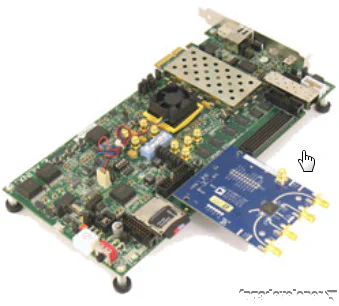
A more powerful version of the MicroZed, this system-on-module carries the largest device in the Zynq family (either XC7Z045 or XC7Z100) and is designed to be easily integrated into your custom designs. It has two high bandwidth expansion connectors on the bottom of the board for interfacing with the standard baseboard or with your own carrier design. The expansion connectors provide access to 132 user I/O pins, including 8 GTX ports which enables the carrier design to support high-speed links such as PCIe, SATA, SFP and Gigabit Ethernet. The modular design concept allows you to easily make changes and upgrades to your product without taking much risk re-spinning the boards.
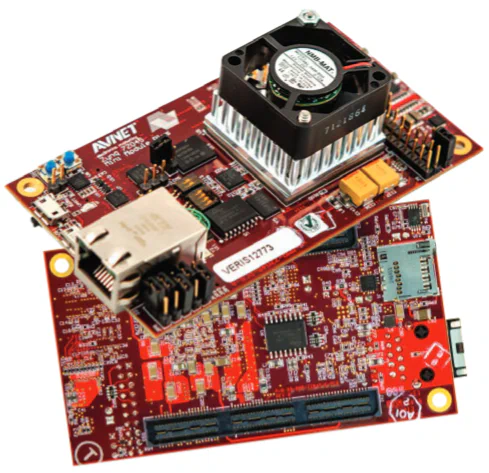
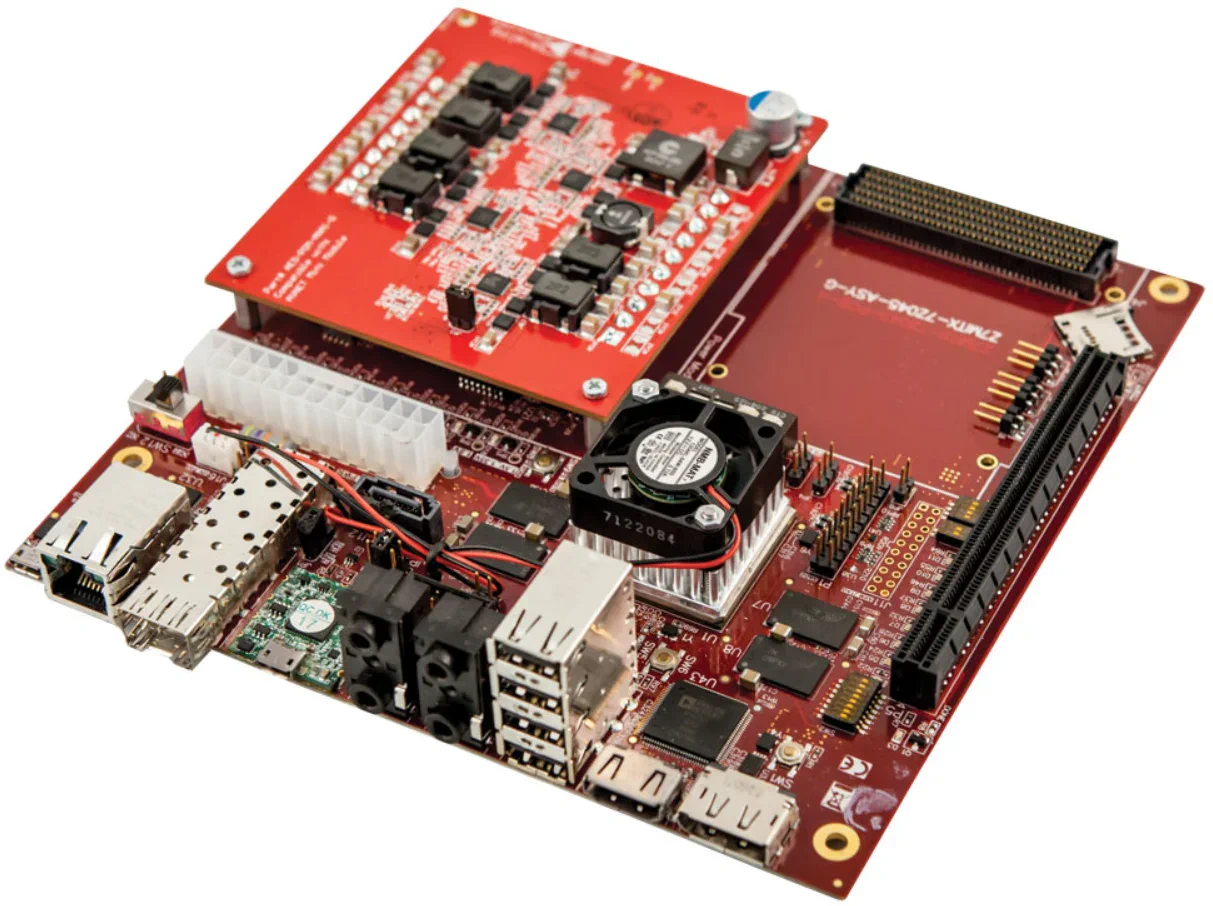
For those who want to play with the Zynq on an industry standard motherboard form-factor, here is the Zynq Mini-ITX. I can see this board replacing PC motherboards in applications that can benefit from hardware acceleration on the Zynq. All the connectivity options are covered on this board, obviously you’ve got everything you would get on a standard motherboard such as GigE, USB and PCIe but with the plus of a high-pin-count FMC. Buy the board as-is or get it with a case and hard drive, either way it comes with power supply, cables and an FMC adapter.
Popularity of the board you purchase is important because you will tend to find more support in the online community for boards that more people are using. To compare the popularity of each board, I used Google Trends to compare search patterns for each board. I also used Google Search to find the number of pages on the Xilinx forum and on the web that related to each board.
Number of pages on the Xilinx forum according to Google Search on 2014-04-30:
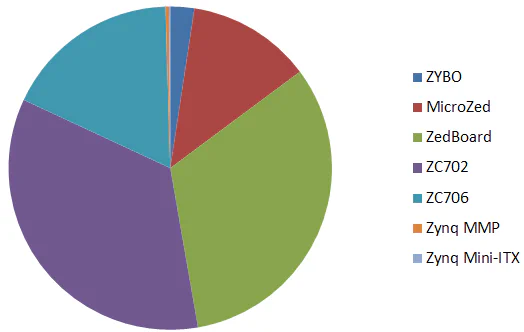
Number of pages on the web according to Google Search on 2014-04-30:
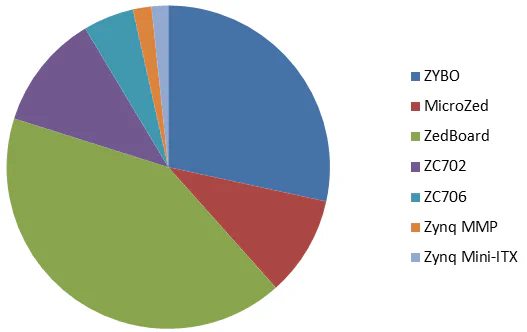
Google trends comparison:
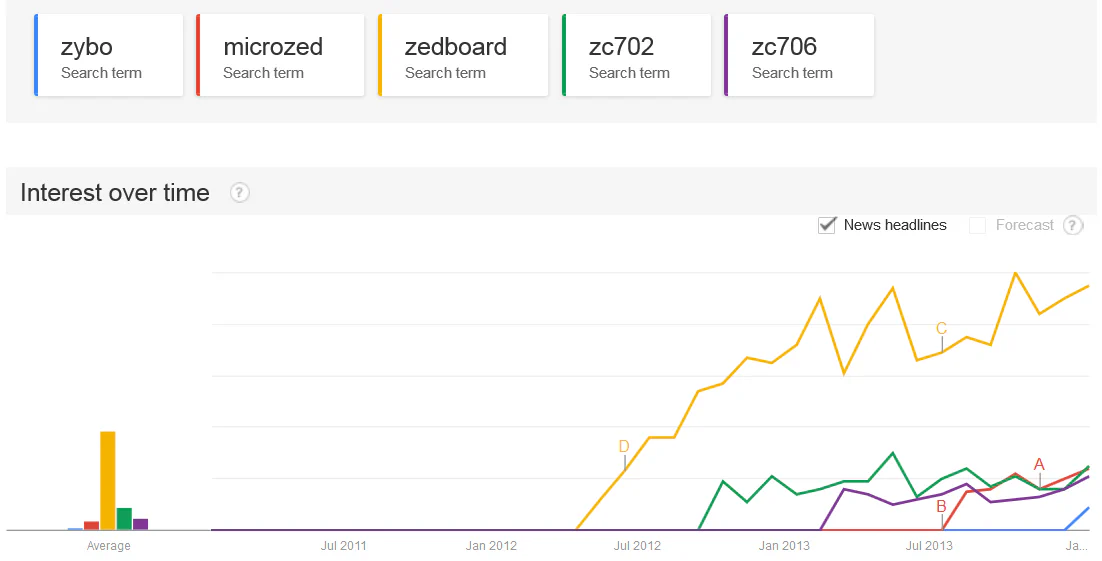
According to Google Trends, the ZedBoard is 3-4 times as popular as the other boards. Xilinx forum activity would have you think that the ZC702 was more popular but the ZedBoard has its own deticated forum which skews the result here. The general web search showed a result that was more similar to the Google Trends result, showing that the ZedBoard is clearly the more popular board.