Device

Artix®-7 XC7A200T-2FBG676C FPGA

Configuration

FPGA configuration is determined by DIP switch SW1.

Config mode 1 2 3
JTAG 1 X 1
Master SPI 0 X 1

Notes:

  1. Switch 2 is not used
  2. X = don’t care
  3. 0 = OFF position
  4. 1 = ON position

Processorless Ethernet: Part 3

State machine based Ethernet on FPGA

Processorless Ethernet: Part 3

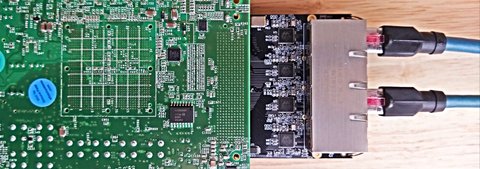
For those of you who want to experiment with processorless Ethernet on FPGAs, I’ve just released a 4-port example design that supports these Xilinx FPGA development boards:

Here’s the Git repo for the project: Processorless Ethernet on FPGA

Why processorless?

Pure hardware designs can trump software where the need for low latency and/or high throughput is greater than the need for flexibility and complexity (eg. the support of complex protocols). There are lots of applications that rely on hardware based packet processing to achieve their superior performance. High frequency trading platforms are often fed market pricing over multicast UDP, so their profitability is directly linked to their ability to process UDP with the lowest possible latency. Network security devices that monitor traffic usually need to be as transparent as possible while also being able to detect threats and take action with the lowest possible delay. Whatever your reason for processing Ethernet frames in the FPGA fabric, make sure that you consider both sides of the coin:

[Read More]

Comparison of 7 Series FPGA boards for PCIe

Comparison of 7 Series FPGA boards for PCIe

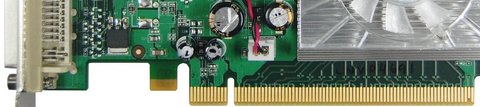
One of my most common customer requests is to speed up execution of a software application using FPGA hardware acceleration. If the application runs on a PC or server, you can achieve impressive performance gains by using off-the-shelf FPGA development boards for PCI Express.

Here is a comparison of the available 7 Series FPGA boards for PCI Express applications:

AC701 Artix-7 KC705 Kintex-7 VC707 Virtex-7 VC709 Virtex-7
$1295 $1695 $3495 $4995
XC7A200T-2FBG676C XC7K325T-2FFG900C XC7VX485T-2FFG1761 XC7VX690T-2FFG1761C
4-lane Gen2 PCIe 8-lane Gen2 PCIe 8-lane Gen2 PCIe 8-lane Gen3 PCIe
1GB DDR3 SODIMM 1GB DDR3 SODIMM 1GB DDR3 SODIMM 4GB DDR3 SODIMM x2
8Kb EEPROM 8Kb EEPROM 8Kb EEPROM 1KB EEPROM
No BPI Flash 128MB BPI Flash 128MB BPI Flash 32MB BPI Flash
32MB Quad SPI 16MB Quad SPI 16MB Quad SPI No Quad SPI Flash
SD Card slot SD Card slot SD Card slot No SD
No LPC FMC 1x LPC FMC No LPC FMC No LPC FMC
1x HPC FMC (*) 1x HPC FMC (*) 2 x HPC FMC 1x HPC FMC (*)
1x SFP 1x SFP+ 1x SFP+ 4x SFP/SFP+
1GB Ethernet 1GB Ethernet 1Gb Ethernet No Ethernet
No USB No USB No USB No USB
UART over USB UART over USB UART over USB UART over USB
HDMI out HDMI out HDMI out No Video
XADC header XADC header AMS port No Analog
  • (*) Note: These HPC FMC connectors are only partially populated which means that they wont be able to support all standard FMCs.
  • There are many more FPGA boards for PCIe on the market, but I chose to limit the comparison to those that are more strongly supported by Xilinx.

The reason these types of boards are so useful in the hardware acceleration space is because PCI Express is the highest bandwidth, lowest latency link that you can have between a PC’s CPU and an external FPGA. There’s no use shipping off work to an FPGA if the time it takes the data to get there and back is more than the time saved through improved processing efficiency.

[Read More]